
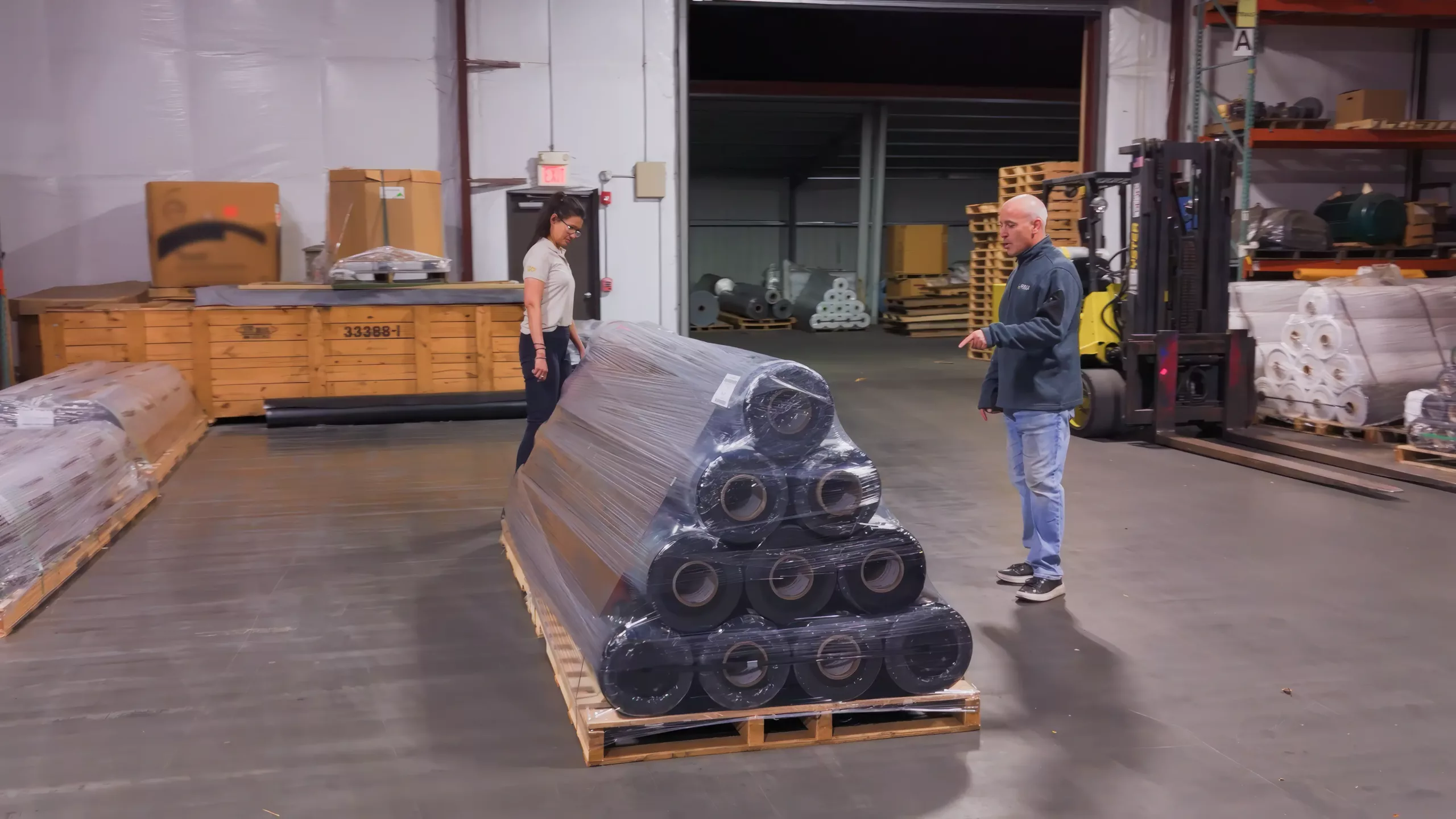
Evaluating a PVC geomembrane supplier comes down to five core factors. These are track record, process control, material consistency, supply reliability, and technical support. While price is undoubtedly a consideration, it should be used as a data point and not a decision driver.
Track record refers not only to how long a company has been in business but also to its level of niche-sector expertise and how it is regarded. Process control refers to the steps a company takes to ensure optimal and consistent output and product quality. Material consistency ensures that the properties of the geomembranes you receive are the same every time. Supply reliability means the company can be trusted to provide what you need, when you need it. And finally, technical support refers to the quality of the assistance and guidance a company provides to help you choose, install, utilize, and troubleshoot its products.
In this guide for engineers and fabricators, we will show you how to choose a supplier you can not only source from once, but also rely on consistently. We’ll explore each of the above factors in detail, with examples of specific questions to ask and red flags to watch for.
Why Price-Only Evaluation Fails on Long-Term Projects
Many companies evaluate suppliers primarily or exclusively on price. While this is understandable on the surface, a low unit price on a geomembrane that varies batch to batch actually creates downstream costs that far exceed the initial savings. Rework, installation delays, and failed inspections are not line items most procurement processes account for upfront. The cost of a liner failure in a water retention or detention application, for example, goes far beyond the cost of material replacement. It potentially includes excavation, remediation, regulatory exposure, and extended project delays.
Long-term containment projects are not simple transactional purchases. Instead, the supplier relationship extends through the project lifecycle and often into warranty or remediation scenarios should something go wrong. Therefore, to ensure long-term performance and cost-effectiveness, a more rigorous evaluation framework is called for. A supplier evaluation framework built around the pillars of consistency, process control, and reliability protects the project, not just the purchase order.
1. Start With the Supplier’s Track Record in Water Containment
Supplier longevity in the water containment, retention, and waterproofing space is the first factor you should consider. When evaluating a supplier, consider how long the company has been manufacturing PVC geomembranes and whether it is its primary business or a secondary product line.
Longevity in a specialized material category signals accumulated process knowledge that generalist suppliers are less likely to have. A supplier whose core expertise is water containment, retention, and waterproofing is also likely to bring application-specific knowledge that goes far beyond material production. These experienced providers understand how their liners perform across the full installation and service lifecycle.
Ask your prospective supplier for references from previously completed water containment or detention projects. A supplier with a long track record in this space will have them. Choosing a domestic manufacturing partner with an established supply history reduces the risk that your supplier will be unable to sustain availability or support across a multi-year project.
2. Prioritize Suppliers Who Control the Manufacturing Process
When choosing a supplier, looking at a company’s manufacturing processes can act as a useful proxy for understanding the quality and consistency of its product output.
What to Ask About Manufacturing
First, ask your prospective supplier whether it manufactures its products in-house or sources from a third party. In-house production gives the supplier direct control over key metrics such as compound formulation, line speed, and quality checkpoints.
Next, ask explicitly about the standards the company uses to govern its production process. Does the supplier monitor output against specifications in real time, or only at the final inspection stage? Continuous monitoring catches dimensional and thickness variation in a PVC geomembrane before it even reaches the roll, not after it reaches the job site.
What Consistent Process Control Looks Like in the Material
A supplier with disciplined and consistent process control will produce material that holds its geometry reliably across thermal cycling. This stability will ultimately protect seams and anchor points throughout the liner’s service life.
Roll-to-roll consistency within the same order is a sign that line conditions are tightly controlled and repeatable, not merely adequate on the day of inspection. Similarly, consistent batch-to-batch tensile and elongation performance should be verifiable. Ask your prospective supplier for test data across multiple production runs, not a single spec sheet.
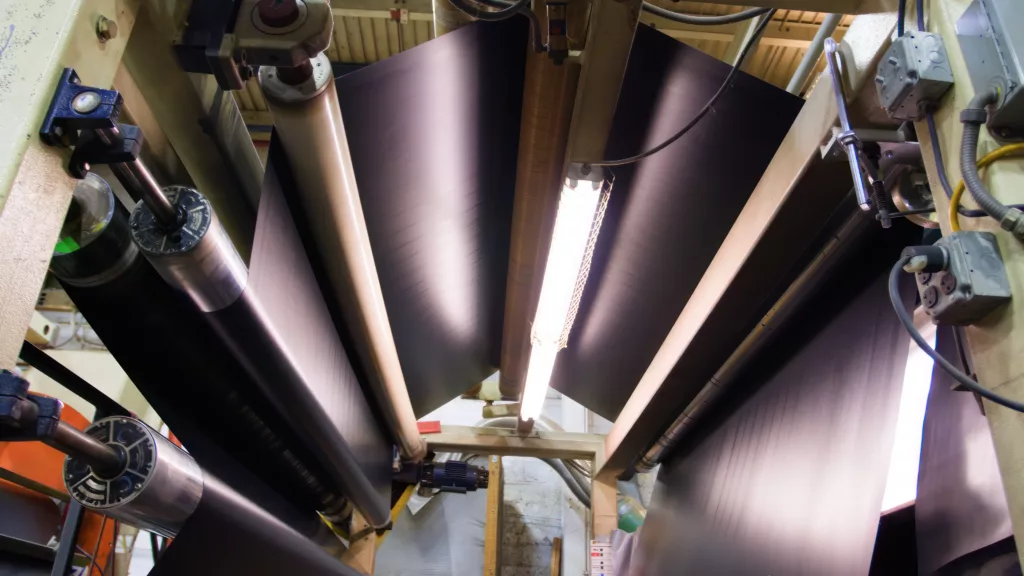
3. Look for Consistency in Gauge, Layflat, and Color Control
Consistency is vital because it ensures you know exactly how a product will perform time after time and order after order. Consistency of gauge, layflat quality, and color control are the most reliable indicators of this consistent performance.
Always ask a prospective supplier for its quality control data across multiple production runs. Consistent results across runs confirm that the material performs the same way order after order, not merely under single-test conditions.
4. Treat Supply Reliability as a Project Requirement
Material availability is a project management variable as much as a procurement one. A supplier who cannot commit to delivery windows creates schedule risk that compounds quickly and can create significant delays and the accompanying costs, particularly for large installations.
Always ask a prospective supplier whether its materials are kept in stock or produced to order. Stocked inventory reduces lead time risk and offers confidence, particularly when project timelines compress. In addition, ensure you understand a supplier’s minimum order quantities and the roll configurations available. A supplier offering flexible ordering and contractor-friendly formats signals awareness of how its materials are actually used.
Choosing domestic manufacturing also reduces exposure to supply chain disruption compared to imported or brokered materials. This is a particular consideration when dealing with fixed timescales or short installation windows.
5. Evaluate Technical Support Before You Need It
Many engineers and fabricators do not consider technical support until they encounter a problem. However, a supplier who can answer detailed technical and specification questions before the order is placed is far more valuable than one who simply sells you a product and moves on.
Ask your prospective supplier for documentation such as compliant spec sheets, applicable certifications, and test data. If it cannot provide any or all of these, you might wish to look elsewhere. Information such as welding compatibility guidance also matters for fabricators. A supplier who can confirm performance across welding methods reduces time wasted and risks introduced by trial-and-error at the fabrication stage.
In addition, your supplier should offer proactive post-delivery support, including the ability to troubleshoot installation issues or provide additional technical documentation. This service often only becomes visible when something goes wrong, but you should always ensure your prospective supplier offers it.
A Practical Checklist Before Committing to a Supplier
As you have seen, evaluating and selecting a PVC geomembrane supplier is far more complex than simply choosing whichever provider is the cheapest. Use the checklist below to ensure you have all the information you need to make an informed decision.
- Does the supplier have an established track record specifically in water containment, retention, and waterproofing?
- Does the supplier manufacture its products in-house under a documented quality system?
- Can the supplier provide batch-level test data, not simply a single spec sheet?
- Is the material stocked or produced to order?
- What are typical lead times?
- What width and thickness configurations are available, and are contractor-friendly roll formats offered?
- Does the material meet applicable compliance requirements for the project?
- Can the supplier provide seam and installation guidance specific to their material?
- What technical documentation is available for engineering submissions?
Choosing a Supplier You Can Spec With Confidence
Evaluating and choosing a supplier for a long-term PVC containment liner or geomembrane is an engineering decision, and taking procurement shortcuts can lead to significant problems later on.
Therefore, engineers and fabricators should take the time to assess prospective suppliers thoroughly, using the five criteria we have discussed. These are track record, process control, material consistency, supply reliability, and technical support. These factors collectively determine whether a supplier can perform across the full project lifecycle.
The checklist in the previous section offers a starting point for any supplier conversation. Always take the time to consider the needs of your particular project and ask any additional questions as appropriate.
Ronald Mark Associates has been providing industry-leading PVC geomembranes for water containment, retention, and waterproofing projects for over 40 years. If you would like to learn more about any of our projects, please contact RMA to discuss material requirements and availability.
related posts
May 11, 2026
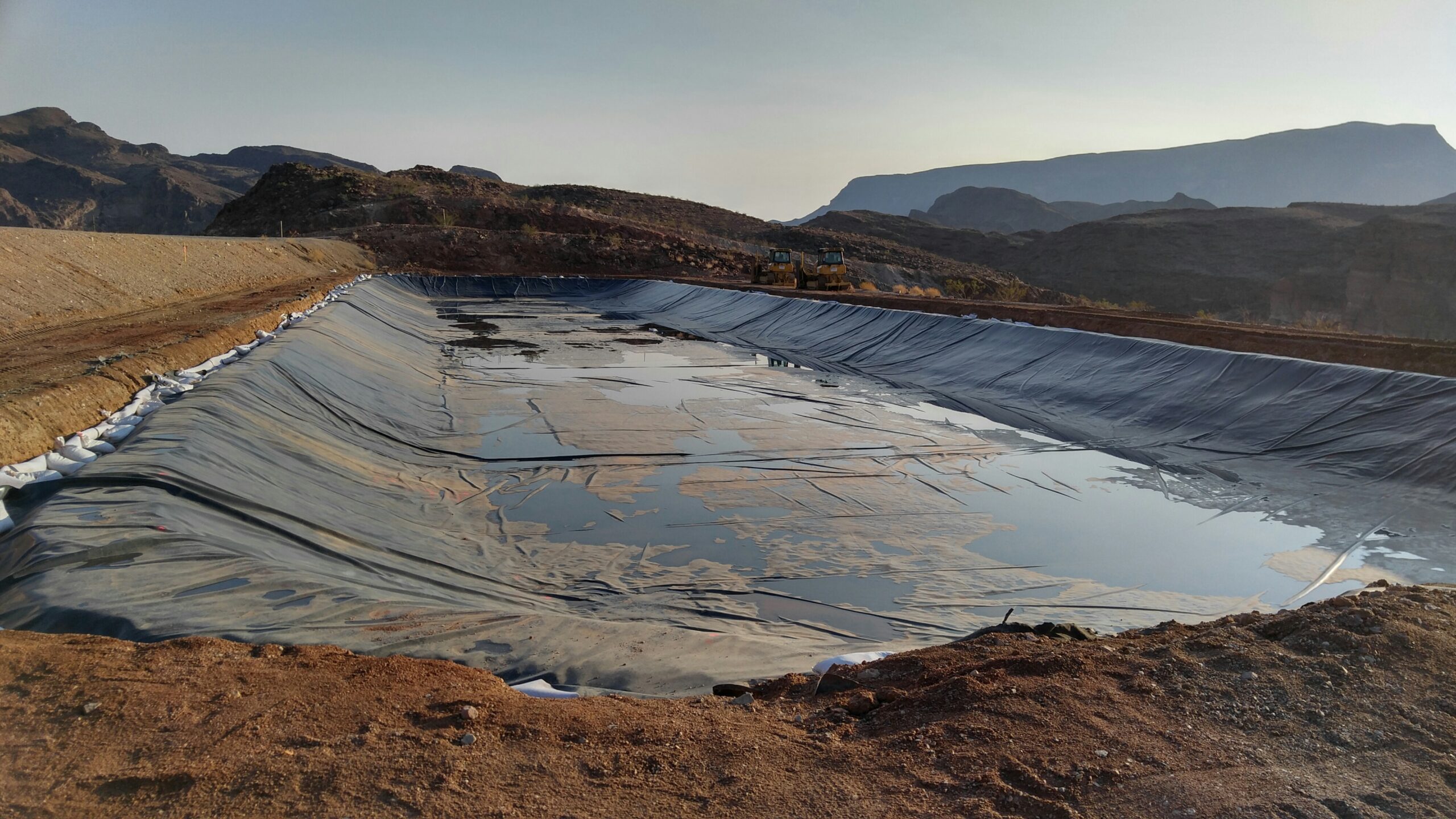
Geomembrane liners–thin, impermeable sheets typically made from synthetic materials and designed to [...]
June 11, 2026
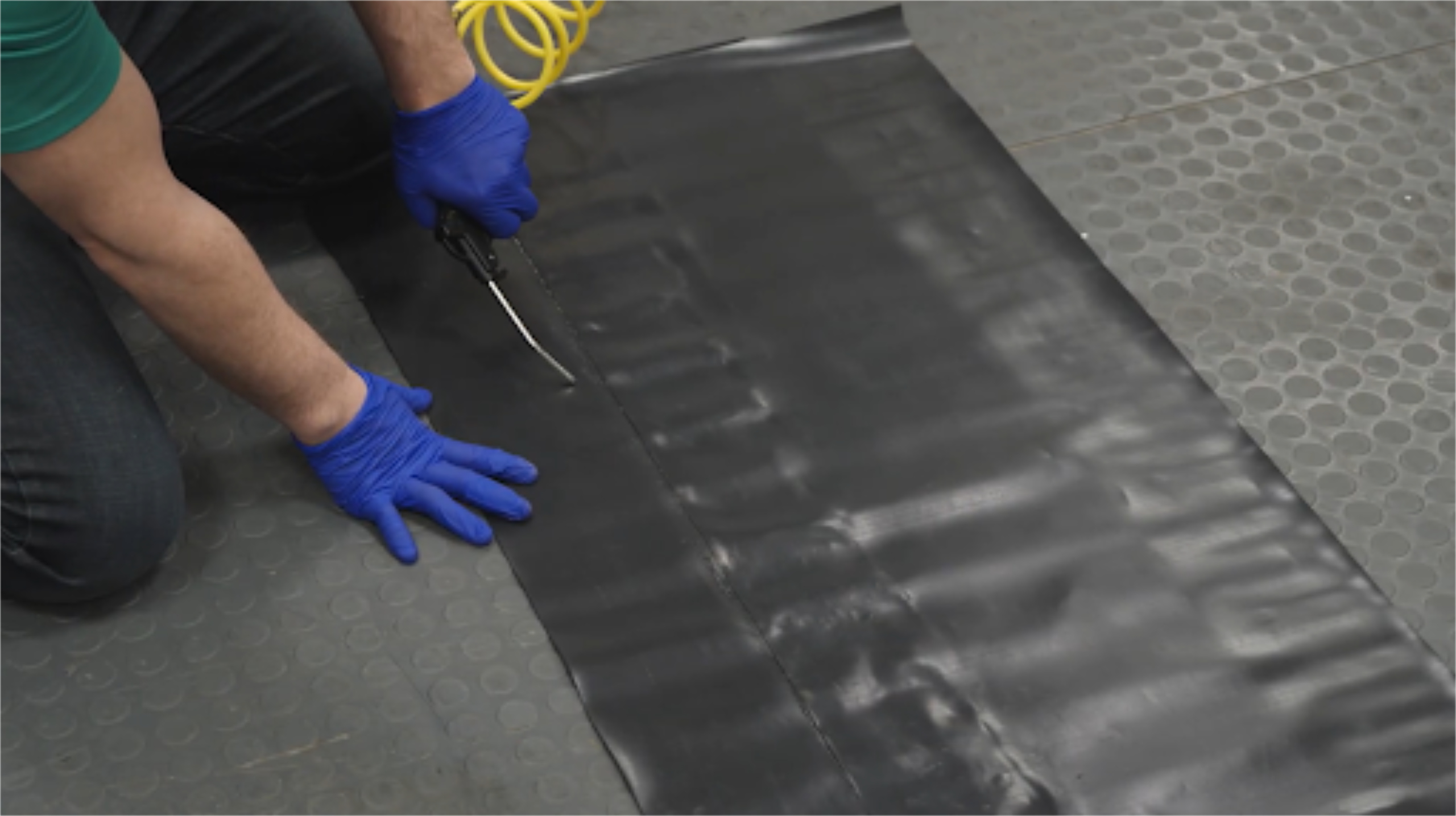
PVC is a strong and highly flexible material, properties which make it [...]

March 24, 2026
To: Our Partners in PVC Roofing, Geomembranes, and Reinforced LLDPE Liners By [...]