
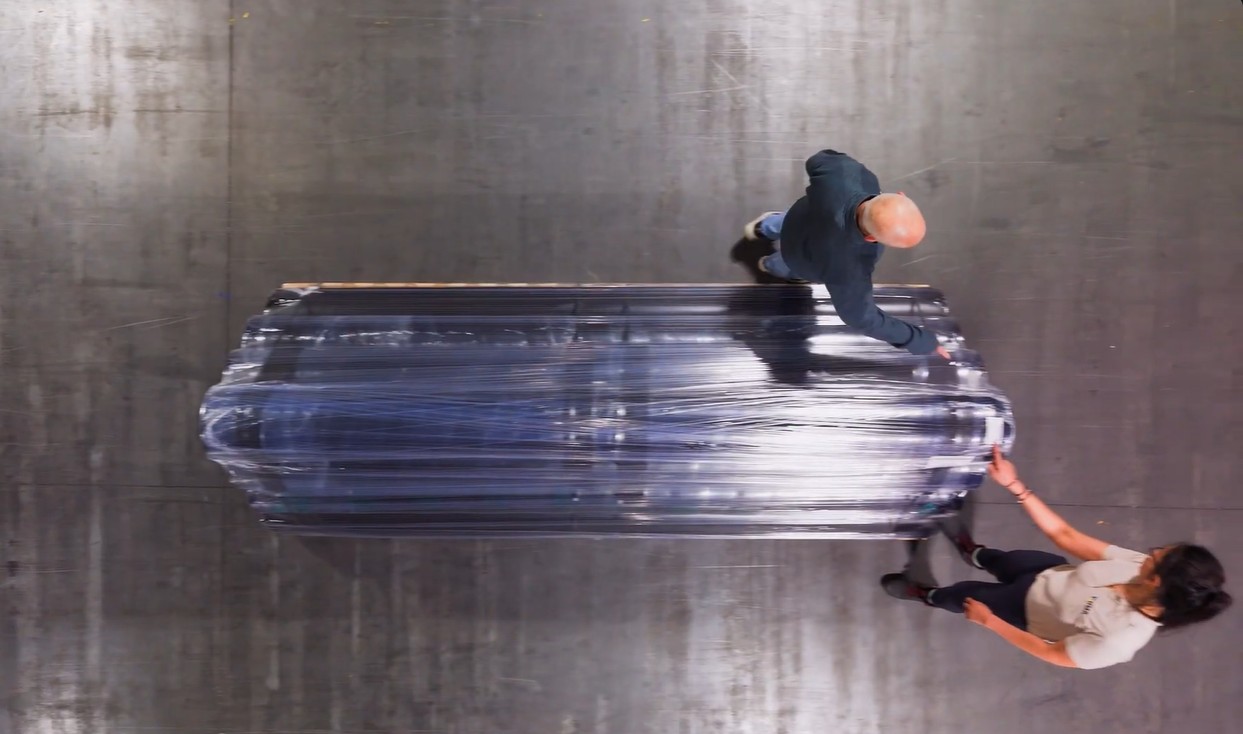
PVC geomembranes are robust and designed to withstand an array of harsh environments, from extreme temperatures to exposure to the elements. Nevertheless, a geomembrane that meets factory specifications can still arrive at a job site compromised if it is transported, handled, or stored incorrectly.
Fabricators preparing material in a shop environment and contractors managing rolls in the field must observe proper handling and storage protocols to ensure that PVC geomembrane rolls retain their quality and integrity from the moment they leave the factory to the point of installation.
What Can Go Wrong Before Installation Begins
PVC geomembranes are durable in service, but can be vulnerable during the shipping and handling stages. Identifying damage before installation is far less costly than discovering a compromised liner after the project is complete. The best solution, though, is to avoid this damage entirely. Sharp edges, improper lifting, and prolonged UV exposure before installation are the most common sources of preventable damage.
Storage conditions can affect the lay-flat quality of a geomembrane. Rolls stored on uneven surfaces or under excessive weight can develop permanent deformation that creates installation challenges. In addition, temperature extremes during storage can impact flexibility. Material stored in very cold conditions needs time to recover and “warm up” before it can be handled and seamed correctly. Working with geomembranes that are too cold increases the risk of rips and tears.
Receiving and Inspecting Rolls on Delivery
Contractors and fabricators receiving PVC geomembranes should inspect every roll on arrival, ensuring material integrity and catching any damage before the roll enters the workflow.
Start with a visual inspection of each roll. Look for visible damage to the outer wrap, core, or roll ends before signing off on the shipment. Take photographs to document any damage immediately, and contact the supplier before you move, unwrap, or use the material.
Next, check the roll’s dimensions and thickness against the order documentation and the ASTM D7176-22 specification sheet. If there is a mismatch, do not accept the shipment.
Wherever possible, have your geomembranes offloaded directly into the location where they will be stored until you are ready to use them. Minimizing moving and handling reduces the chance of damaging the materials before deployment. Storing rolls of PVC geomembrane in their original packaging will help to protect them from UV exposure, contamination, and accidental damage.
PVC Geomembrane Storage Requirements
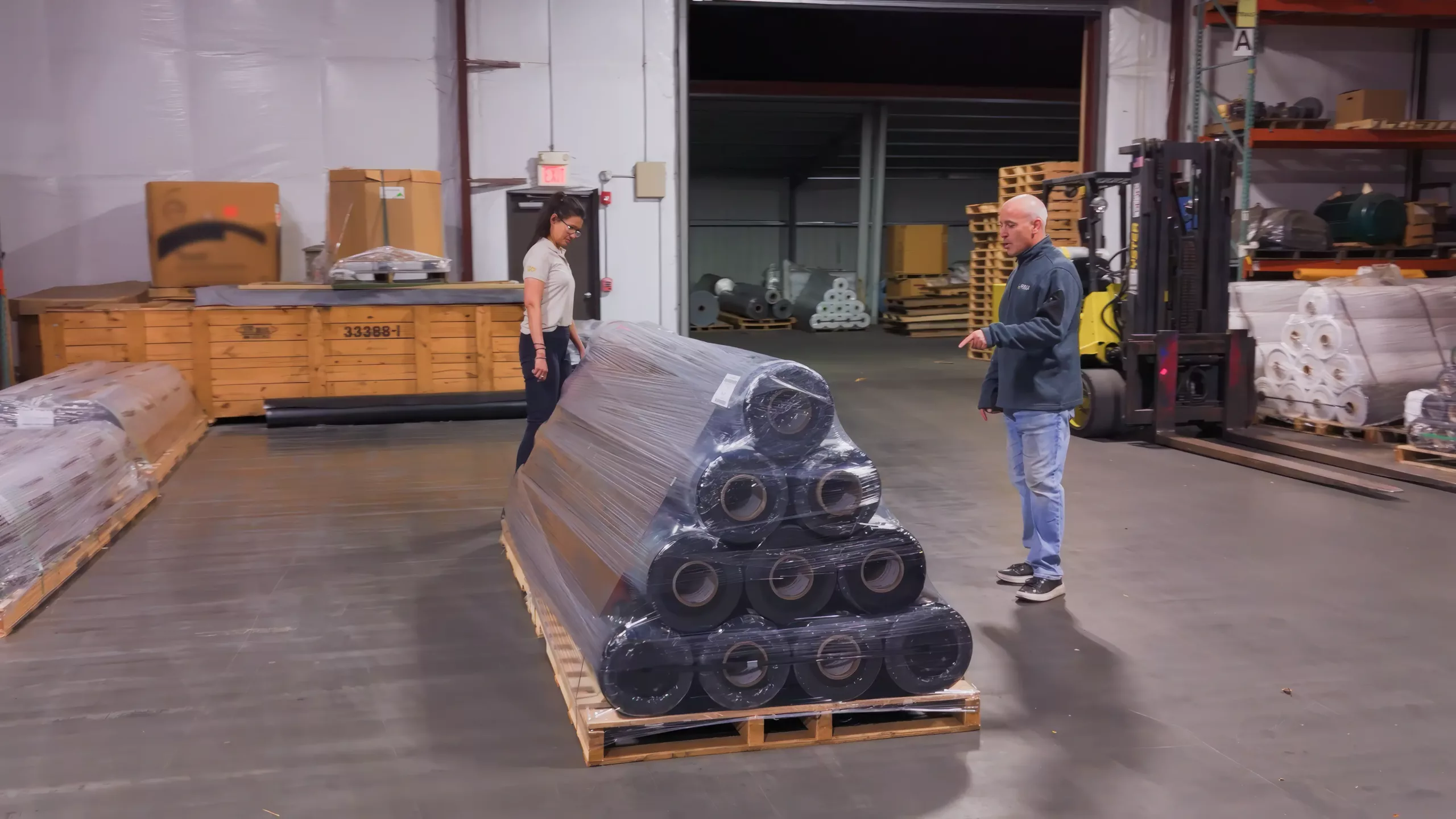
Storing your PVC geomembrane rolls correctly significantly reduces the risk of damage occurring between when you accept the shipment and when you are ready to deploy the materials. In this section, we will cover the best storage practices for both indoor and outdoor environments.
Indoor Storage
Indoor storage is always the preferred solution when it is available. To store PVC geomembranes indoors, place the rolls horizontally on a flat, clean surface with adequate support along the full length of each roll to prevent core deformation.
Do not stack rolls if you can avoid it; they are heavy, and the combination of sustained weight and heat places stress on the bottom rolls that may cause deformation, ultimately affecting lay-flat performance during installation. Excessive stacking also puts your staff at risk of handling accidents and injuries.
Keep the storage areas clean and dry, and ensure it is free of sharp objects, chemicals, and standing water. Avoid exposing rolls to prolonged temperature extremes, as both very high and very low temperatures can damage the material’s flexibility and strength before installation.
Outdoor or Field Storage
Storing PVC geomembranes outdoors or in the field is not ideal, but may sometimes be essential. If outdoor storage is unavoidable, limit the duration wherever possible and rotate your stock so that older rolls are used first.
Cover the rolls with opaque tarps to limit exposure to the sun’s harmful UV rays. PVC geomembranes are engineered to offer UV resistance in service, but extended pre-installation exposure can accelerate surface degradation.
Placing them on a geotextile or similar protective layer can help to prevent damage caused by sharp objects on the underlying surface. A firm, level base will protect the lay-flat quality of your geomembranes and prevent moisture ingress from damaging them.
Keep the storage area dry, and use a secure covering to protect it from the wind. Preventing tarp movement is essential, as too much movement can abrade the surface of the roll.
Finally, remember to account for site security if materials will be stored in the open for any length of time. PVC geomembranes are valuable, and vandalism and theft are real concerns.
Storing Seaming Materials and Accessories
If you are storing PVC geomembranes ahead of deployment, you will likely also need to store the materials and accessories that will be used to install the membranes.
Keep accessory materials dry and sealed in their original packaging until you need them. Store adhesives, primers, and tapes in temperature-controlled conditions until you are ready to use them. These seaming consumables are more sensitive to temperature swings than the geomembrane itself, and can rapidly lose performance if left exposed.
How to Handle PVC Geomembrane Rolls Safely
PVC geomembranes are large, heavy, and unwieldy. Correct handling is essential, both to maintain the integrity of the material and to avoid personnel injury.
Use lifting equipment appropriate for the roll weight and size, such as a front-end loader or forklift fitted with the correct slings. When using slings, forklifts, or spreader bars, ensure that the contact points are padded to avoid puncturing or creasing the roll. Never drag rolls across the ground or drop them from a height.
Keep your transport routes as short and direct as possible, and move your materials from the storage location to the point of use with as little handling as possible.
If your rolls have been stored in cold conditions, allow them to warm to ambient temperature before unrolling. Forcing a cold PVC geomembrane to unroll significantly increases the risk of cracking or stress damage at the core. When you are ready to use the material, unroll it onto a clean, prepared surface that is free of stones, debris, sharp objects, or standing water.
Preparing Material for Fabrication or Installation
Before you begin cutting, seaming, and installing a PVC geomembrane, perform a visual inspection to ensure the unrolled sheet is free from surface defects, pinholes, or deformation. Confirm the roll thickness matches the project specification, then allow the material to lie flat and relax before taking measurements or marking cut lines. PVC that has been under roll tension will need time to reach its natural dimensions, so don’t rush.
Keep the work surface and the sheet clean and dry throughout fabrication and installation. Contamination or moisture on the sheet surface can compromise seam quality, causing seams to peel and making seam strength requirements harder to attain.
Before seaming, ensure you account for temperature differentials and their impact on the material. If the geomembrane has been sitting in the sun, it may have expanded through thermal elongation. This issue is reversible by letting the material settle. PVC panels being welded together should be brought to a consistent temperature first, since welding panels at different temperatures can cause wrinkling in the finished product.
Good PVC Geomembrane Handling Is Part of the Installation
While ensuring high material quality is the manufacturer’s responsibility, how a geomembrane is handled and stored before installation ultimately determines whether that quality reaches the final project.
Damage caught before installation costs far less than remediation after the liner is in the ground. The steps we have covered in this article–inspection upon receipt, correct storage, safe handling, and pre-installation preparation–are straightforward for fabricators and contractors to implement, and significantly reduce the risk of preventable material loss and the resulting costs and delays.
If you would like to know more about material handling, project specifications, or any of Ronald Mark Associates’ PVC geomembrane products, please contact RMA directly and a member of our team will be pleased to advise you.
related posts
July 21, 2026
A polyvinyl chloride (PVC) geomembrane is a flexible, single-ply impermeable liner with [...]
December 15, 2025
For RV manufacturers focused on improving energy efficiency and interior comfort, roofing [...]

January 12, 2026
The roof is one of the most important components in an RV [...]