
PVC is a strong and highly flexible material, properties which make it ideal for use in geomembrane liners for water containment and other civil, environmental, and industrial applications. However, though they are robust and can last for many years with proper care, PVC geomembranes can become damaged through punctures, weather, environmental degradation, or ordinary wear and tear.
This means that repairability is a practical concern for anyone managing a containment installation throughout its service life. Understanding how to repair PVC geomembranes in the field is an essential skill for engineers, fabricators, and installation teams.
Damaged PVC geomembranes can usually be repaired using a chemical adhesive bonding process. This creates a bond as strong as the parent material and does not require specialized welding equipment.
At Ronald Mark Associates, we have been producing PVC containment membranes for over 40 years, including perfecting the repair processes we will describe in this post. In the following sections, we will explore the importance of repairability and how PVC compares to other, stiffer liner materials. We will also show you how to assess damage and how to verify a completed repair.
Why Repairability Matters in the Field
Geomembrane punctures and tears can happen during installation due to equipment traffic or sharp subgrade debris. They can also happen over the life of the installation for a variety of reasons.
When a geomembrane liner is irreparable or difficult to repair, a small, localized issue can quickly lead to extended downtime and higher remediation costs. In the case of critical systems, the knock-on impact can be significant.
Field-repairable materials, on the other hand, allow fabricators and site crews to repair damage quickly without specialized welding equipment or a certified technician.
Assessing the Damage Before Repairing
Prior to beginning a repair process, engineers or fabricators should complete appropriate diagnostics to understand and assess the problem.
Damage to a PVC geomembrane liner is typically identified through visual inspection. Check the liner carefully for punctures, tears, or seam separation, keeping in mind that there may be more than one area of damage.
The extent and location of the damage will determine whether a simple patch is sufficient or a larger section of the liner needs to be replaced.
Before you begin the repair, prepare the geomembrane’s surface by ensuring it is as clean as possible and free of any dirt or debris. Surface contamination makes it harder for the adhesive to form a strong bond with the material, compromising the integrity of the repair.
How to Repair a PVC Geomembrane Using Chemical Bonding
Once you have assessed the damage and ensured the area to be repaired is clean and free from debris, you can begin the repair. In this section, we will show you a simple step-by-step process for performing a repair on a damaged PVC geomembrane containment liner.
We have also created a video tutorial to help you.
You Will Need
RH Adhesives HH-66 vinyl cement is the adhesive we recommend for bonding PVC geomembrane in containment applications. This simple, fast-drying, yet ultra-effective, industrial-strength liquid adhesive forms waterproof seals across spaces measured in acres and is specifically designed for PVC and vinyl-coated fabrics.
You will also need a brush and a container to hold your adhesive. A 2- to 4-inch chip brush with a paint bucket or roller tray works well. Ensure these, too, are clean and free from dirt or debris before you begin.
Preparation and Safety
Repair your damaged PVC geomembrane in a well-ventilated area away from any sparks or flames. Wear gloves to protect your skin and keep rags on hand for cleanup.
Lay out the membranes to be repaired with a standard 12-inch overlap, ensuring that you have plenty of space to work.
Applying the Adhesive
Work in manageable sections of approximately three to four feet at a time. Starting from the center of the patch and working outwards so that any wrinkles are easy to remove, spread a band of adhesive at least 4 inches wide across both surfaces. This ensures a watertight bond even if the membranes do not line up perfectly within the 12-inch overlap.
Let the adhesive sit until it becomes tacky. This should take around two minutes.
Attaching the Membranes
Once the adhesive is tacky, press the membranes together firmly and apply even pressure from the center outwards. You can do this with your hands or feet, or use a roller if you prefer.
How Long Will It Take to Cure?
The bond you have created will set in about an hour and continue strengthening for around a day. When it is fully cured, the bond will exceed the strength of the PVC material itself.
Verifying a Completed Repair
Once your repair is completed, it is essential to verify its success before the geomembrane is deployed back into service.
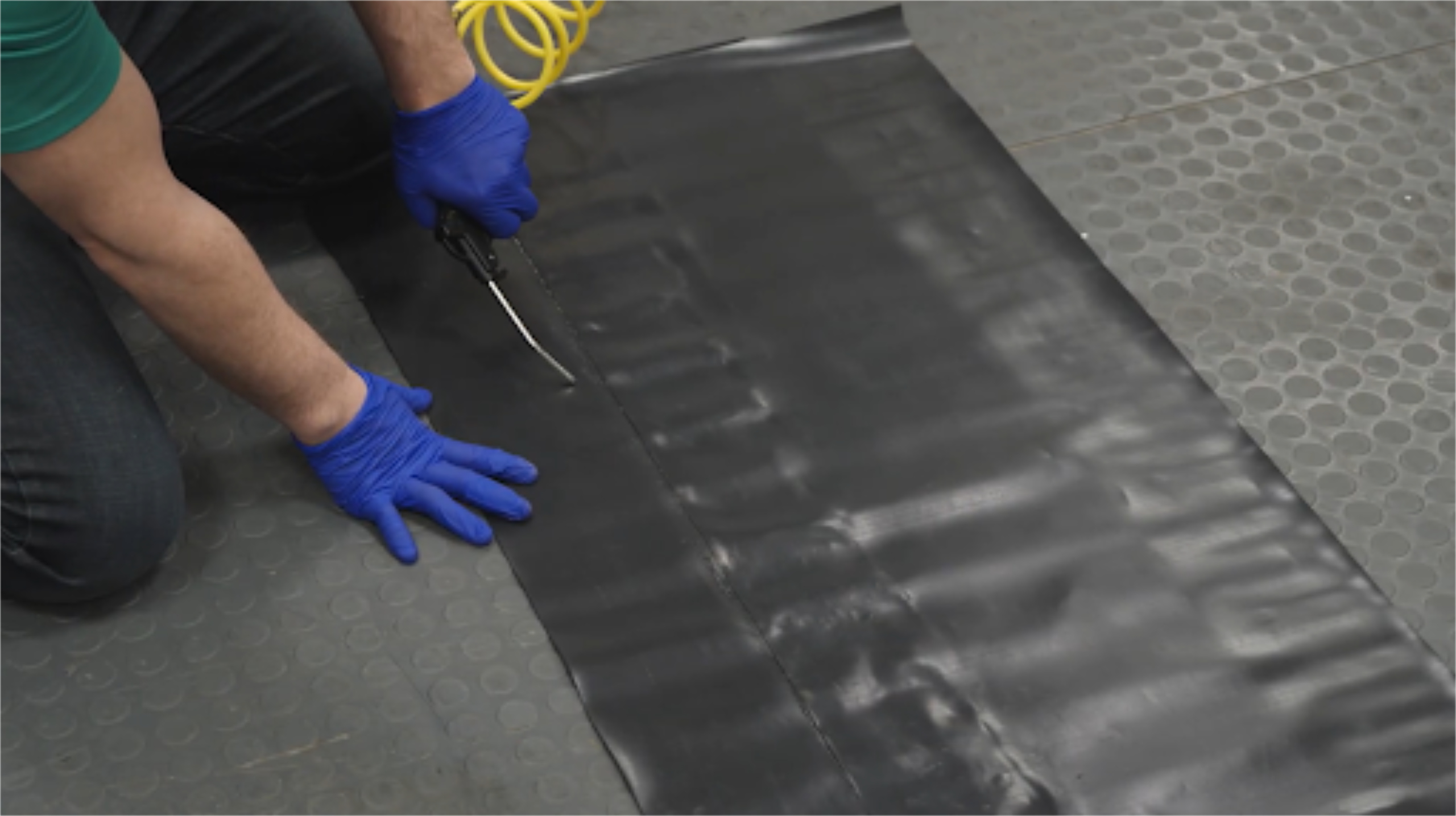
Air lance testing is a nondestructive verification method that represents the industry standard for checking a bonded seam or patch across all types of geomembranes, not exclusively PVC. It works by directing compressed air along the bonded area and observing for delamination or peeling.
No separation under testing indicates a sound, watertight bond that is ready for service. Separation signals a problem and may indicate that the seal needs to be redone.
Repairability as a Practical Advantage Over Stiffer Materials
PVC is one of the easiest geomembrane materials to repair. By comparison, EPDM is moderately difficult to repair, while HDPE is significantly more difficult as it requires specialized equipment. The chemical bonding method described above requires only basic materials–adhesive, a brush, a roller, and some rags–rather than the calibrated welding equipment required for thermoplastic materials such as HDPE.
This ease of repairability translates to faster turnaround times for fabricators and site crews, allowing them to quickly handle repairs in the field without waiting for specialized welding crews or equipment mobilization.
Reliable, Field-Ready Repairs for Long-Term Containment
PVC geomembrane properties make it highly desirable for water containment and other civil, environmental, and industrial applications. PVC is a strong, flexible, robust, and affordable material. It is also highly repairable, which can significantly extend its lifespan and reduce the need for costly replacements. It can also reduce or eliminate downtime for critical systems.
PVC geomembrane damage can be identified, cleaned, patched, and verified using straightforward field tools and a proven adhesive bonding process without the need for specialist skills or equipment. This ease of repair provides a meaningful advantage over stiffer and harder-to-repair materials.
All Ronald Mark Associates XTRM PLY® PVC geomembrane liners are designed to be long-lasting and easy to repair following the simple process outlined above. If you would like any more specification details or repair guidance, please contact RMA to speak to a member of our team.
related posts
February 20, 2025
A recreational vehicle, or RV, is a type of home on wheels. [...]
July 21, 2026
A polyvinyl chloride (PVC) geomembrane is a flexible, single-ply impermeable liner with [...]
July 28, 2026
Evaluating a PVC geomembrane supplier comes down to five core factors. These [...]