
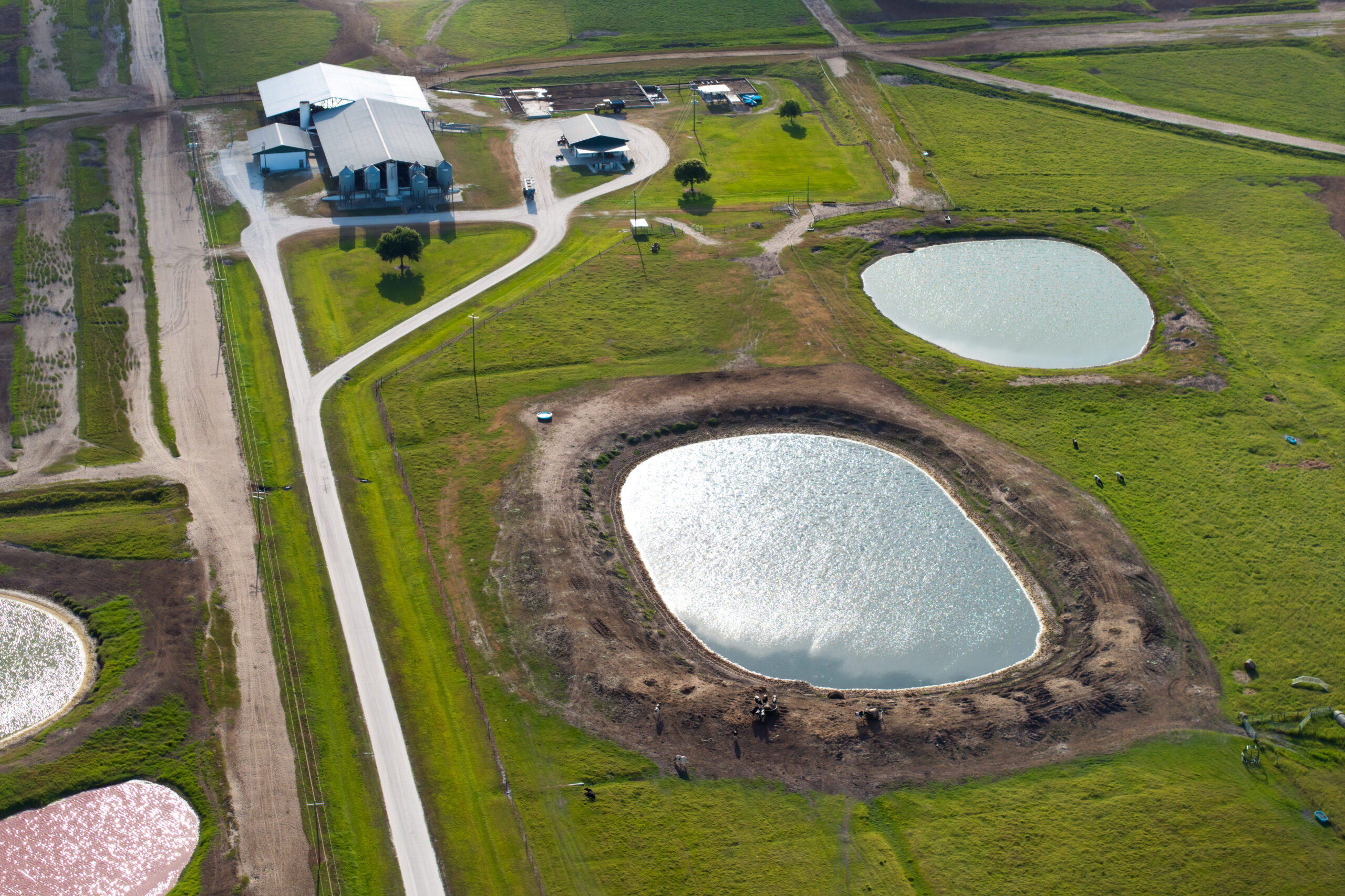
Polyvinyl chloride (PVC) is a versatile material suitable for numerous uses. One common use is as a liner material in water retention and detention ponds, both of which play a crucial role in water management systems.
Flexible, single-ply, impermeable PVC liners have been used successfully in water containment systems since the 1960s, giving the material a long track record in this space. They are also recognized under ASTM, EPA, and USDA NRCS standards.
There are several PVC geomembrane properties that make it one of the best choices of material for these purposes.
PVC’s chemical stability makes it resistant to chemical degradation. Its flexibility makes it ideal for large panel fabrication, and its reliable seam integrity ensures dependability in water containment projects. In this post, we will explore these three factors in more detail, as well as discuss the weldability and manufacturing quality of PVC liners for water retention and detention applications.
1. Chemical Resistance and Long-Term Water Containment
PVC exhibits a high level of chemical stability, meaning that it will not be degraded or damaged by corrosive substances. In particular, PVC is resistant to moisture, salt, and soil chemistry, which ensures consistent performance throughout the liner’s life in the context of both buried and non-buried water containment applications.
PVC is highly resistant to hydrolysis, a chemical process in which water breaks the bonds of a larger molecule. It is also resistant to microbial attacks in standing water environments, which is particularly valuable in long-term water retention applications, as microbes can grow in water over time.
PVC can also be manufactured and treated to make it resistant to weather damage and the sun’s UV rays. This is vital for exposed (i.e., non-buried) pond applications and ensures the liners retain their integrity and perform well for decades, even in direct sunlight or harsh weather conditions.
For buried installations, industry guidance recommends covering PVC liners with a minimum of 12 inches of soil measured perpendicular to the finished surface. This covering material should be free of sharp or angular stones, which could tear the membrane, have a maximum allowable particle size of 3/8 inch for PVC geomembrane liners, and be placed within 24 hours of placement and anchorage of the liner.
RMA’s XTRM PLY® PVC liners are suitable for a wide range of water containment applications, including potable water reservoirs, wastewater lagoons, and water and wastewater treatment, as well as retention and detention ponds.
2. Flexibility and Fewer Seams in Large-Scale Installations
PVC is a flexible yet strong material, meaning it can conform to uneven surfaces without damage. It is less vulnerable to cracking than other, more rigid liner materials. This flexibility also allows for factory fabrication of large, folded panels as opposed to field assembly from many small ones.
Factory-fabricated PVC panels are routinely produced in large sizes and factory-welded under controlled conditions, which eliminates the risk of field-welding problems caused by adverse weather conditions.
RMA’s wide-width panels, for example, can measure up to 120 inches and reduce seaming requirements by up to 40 percent. Even the strongest and most reliable seaming methods introduce additional variability and, therefore, additional potential problems. When the consequences of a liner failing can be significant, removing potential points of failure is a high priority for engineers and fabricators. Fewer seams directly reduces the risk of leaks, tears, and other vulnerabilities.
3. Weldability and Installation Versatility
PVC can be welded in four main ways: heat welding, RF welding, adhesive welding, and wedge welding.
Heat welding involves melting the edges of the liner material and then fusing them together. It is one of the most reliable methods for joining PVC panels and creates a robust, permanent bond.
Radio frequency (RF) welding, also known as high-frequency (HF) welding, utilizes high-frequency electric fields to heat and melt the material. The two pieces are then pressed together by a machine until they fuse into a single, stable piece.
Adhesive welding joins two pieces of PVC together using a special adhesive applied to the edges of the liner. Depending on the properties of the adhesive used, this method can be just as reliable as heat-based welding methods.
Finally, wedge welding utilizes a heated metal wedge, which is placed between two overlapping PVC pieces. Pressure rollers then melt and fuse the materials together. While heat welding is often seen as a gold standard, each method of welding has its own advantages and drawbacks. Having access to different welding methods affords engineers and fabricators flexibility depending on site conditions, available equipment, and the unique requirements of a project.
Weld reliability is critical in water retention and detention applications, since a compromised seam represents a potential containment failure.
The Importance of Manufacturing Quality Behind Every Panel
Not all PVC liners are of equal quality. Fabrication advantages and seam performance are ultimately determined by consistent and verifiable quality at the point of manufacturing.
Bowed or wrinkled PVC sheeting poses a risk of leaks during installation and, if not addressed, can form tension creases that will weaken and degrade the material over time. They can also trap organic matter and debris. A consistent lay-flat quality helps to avoid these issues and ensures the integrity of the liner during and after installation.
Reputable PVC liner manufacturers should perform regular in-line material inspections and continuously monitor their products during production to ensure consistent thickness and quality. When sourcing PVC liners, look for ISO 9001:2015 certified manufacturing processes as a credibility marker for engineering-grade consistency.
A Dependable Liner Material for Long-Term Projects
PVC is a dependable, engineering-grade material that is ideal for water retention and water detention pond liners.
It offers exceptional chemical stability and will not be damaged by standing water or soil chemistry. Its flexibility allows for larger sheets, wide-width panels, and fewer field seams, reducing risk in large installations. This flexibility also reduces the risk of cracks and allows the liner to conform to uneven and irregular terrain. The weld versatility of PVC gives fabricators and installers various options, allowing them to adapt to site conditions and the needs of any given project.
When you choose a quality PVC liner from a reputable manufacturer, these properties ensure reliable and consistent water containment year after year in both buried and non-buried applications. PVC geomembranes have been shown to offer excellent performance for over 20 years in exposed environments.
Of course, installation practices also matter for ensuring long-term performance. Installers should minimize liner penetrations, ensure anchor trenches are properly backfilled, and ensure any seams or welds are carried out correctly, as well as follow any specific instructions from the manufacturer. These standard precautions will protect any geomembrane installation, regardless of the material used.
Engineers and fabricators wishing to learn more about PVC liners for water containment or about any of RMA’s products, including our market-leading XTRM PLY® PVC geomembranes, can contact Ronald Mark for specification details, further information, or project-specific guidance.
related posts
July 28, 2026
Evaluating a PVC geomembrane supplier comes down to five core factors. These [...]
February 20, 2025
A recreational vehicle, or RV, is a type of home on wheels. [...]
July 25, 2026
PVC geomembranes are robust and designed to withstand an array of harsh [...]